
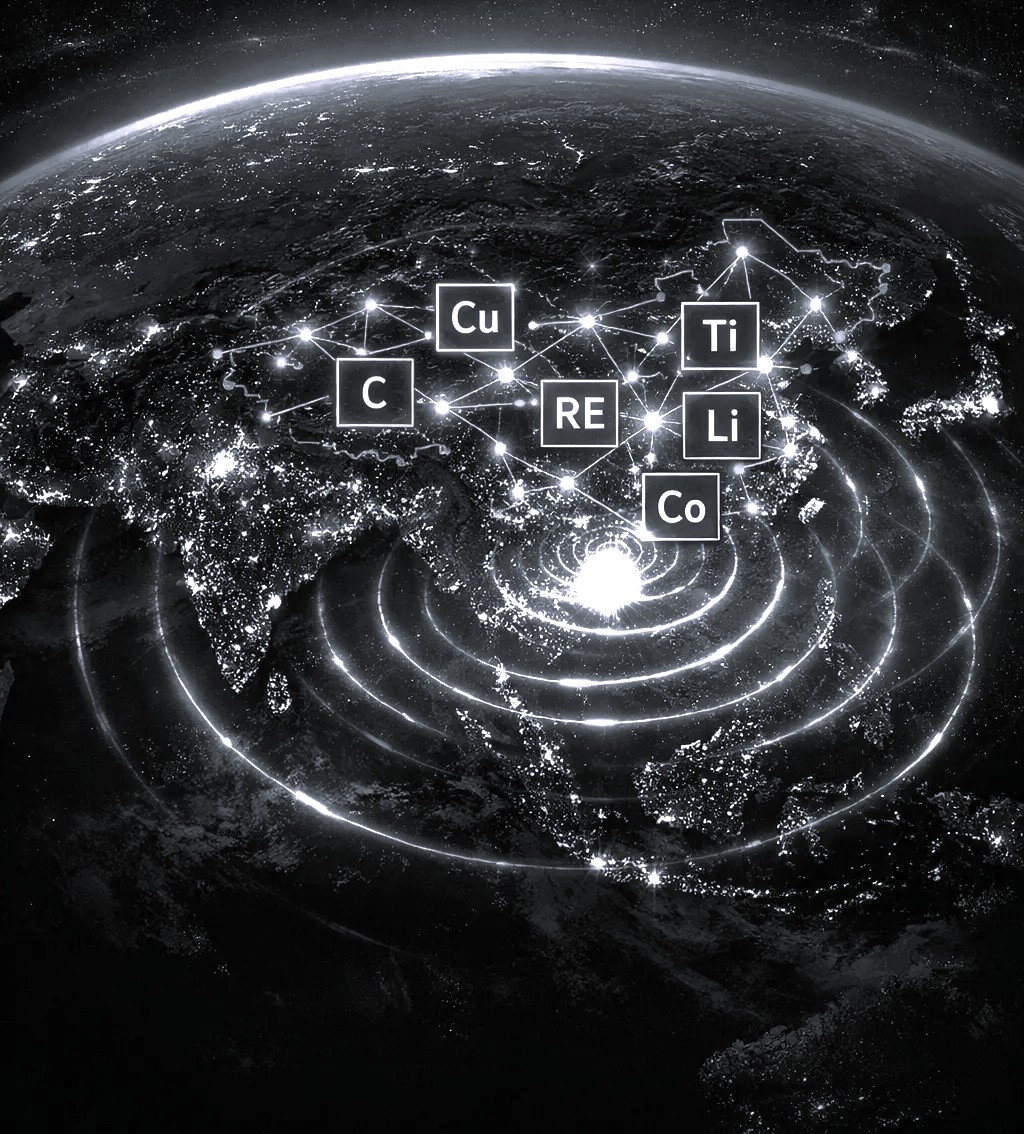
The recent closure of the Strait of Hormuz has exemplified how fragile global supply chains are. This report focuses on the potential of an escalating conflict between United States and China. It outlines why Taiwan is the flashpoint. This report highlights the severe vulnerability of critical global supply chains that are fundamental to economic growth and technological innovations.
The next industrial/technological revolution will not be determined by who owns the resources.
.
It will be determined by who controls the capacity to process them.
.
The Market Focus: Semiconductors
Taiwan dominates global semiconductor production, particularly in advanced chip manufacturing. Semiconductors are embedded in the preeminent AI narrative. The severe supply chain vulnerability a Chinese Taiwan invasion has the potential to cause is front and center in mainstream market narrative.
TSMC (Taiwan Semiconductor Manufacturing Company) produces approximately 90% of the world’s most advanced semiconductors, fundamental in AI applications. Broadly speaking, Taiwan is responsible for over 60% of the world’s chip making capacity.
The risks of a Chinese invasion or blockade have the potential to disrupt the critical supply chain due to physical damage, power issues, supply disruptions, and export controls. A potential disruption in the Taiwanese supply chain would have cascading effects beyond AI applications in smartphones, EVs, consumer electronics, and military systems.
This critical choke point, however, is only the tip of the iceberg, the first order effect.
The Higher-Order effects:
.
Critical Materials, Metals & Commodity Supply Chains
The Western response would not only mirror but likely exceed post-Ukraine (Russian) measures: Financial sanctions, embargos, export controls, tech bans. Measures that will undoubtedly be met with retaliatory export bans, boycotts, and economic statecraft by China.
While the West will retain access to most raw commodities and metal ore, mining and the resources themselves are not the real choke point. What is largely overlooked by the market is the stark reality that it is refining and processing capacity (that transforms raw resources into high-purity forms of critical metals and materials) that a broad spectrum of critical industries and technologies depend on to exist.
China dominates refining and processing capacity for most critical metals and materials essential for semiconductors, EVs, Renewables, Electronics, Robotics and Defense systems. In aggregate, China controls 70% of the global refining market share for 19 of the world’s 20 most critical minerals.
Critical Materials, Metals, and Commodity Supply
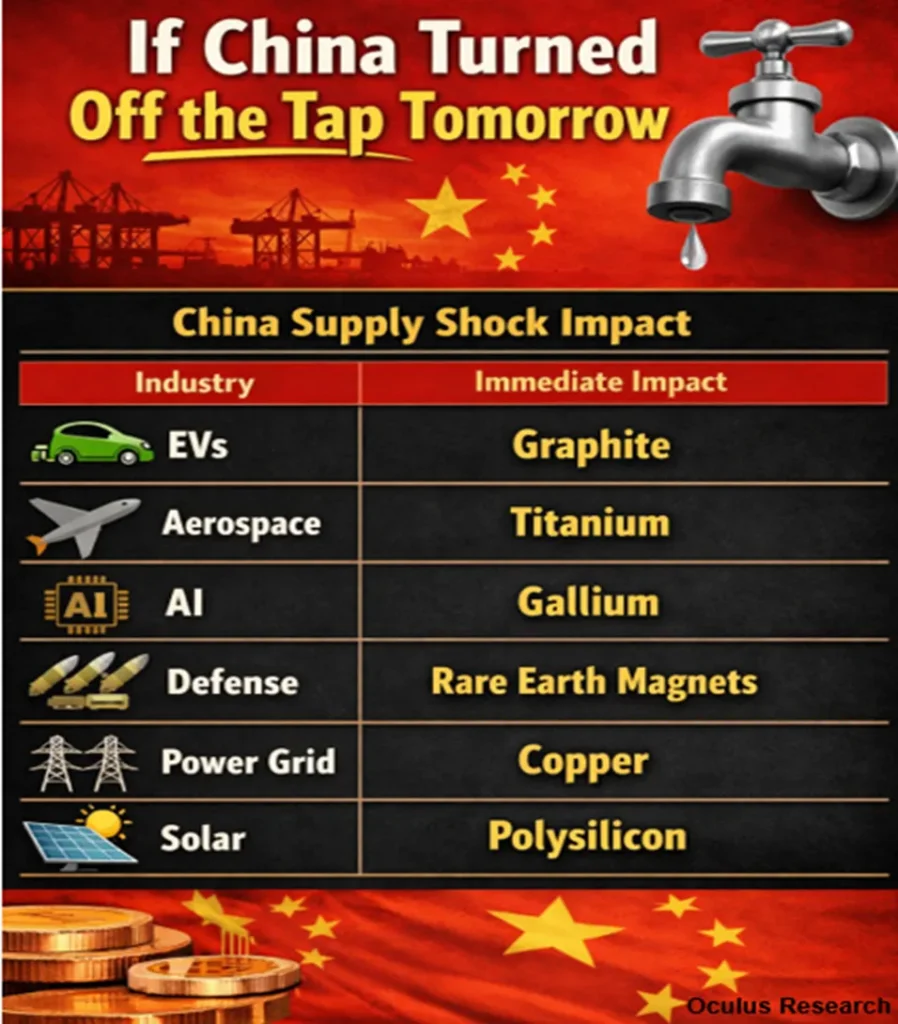
The implications of a Chinese – Western conflict surrounding Taiwan are profound. Presently, the West is wholly unprepared. The tangible threat to the world’s most critical of supply chains necessitates a domestication of these critical supply chains by Western nations regardless of whether the threat manifests. The closure of the Strait of Hormuz, and its cascade of consequences should not be viewed as an isolated incident, but a wake up call: exemplifying how interconnected the world has become, and just how vulnerable key global economic inputs are. The market has not fully accepted the fact that the status quo of the global commodity supply-chain landscape is no longer tenable.
The question becomes, what is the biggest risk, threat to maintaining a peaceful, harmonious relationship between U.S. and China.
Why Taiwan Matters
Taiwan is the geographic, technological, and economic chokepoint where U.S. – China rivalry converges.
Geographically Taiwan is the linchpin of Indo-Pacific stability. It preserves the balance of power in the region by constraining China’s ability to constrict global shipping lanes, pose a threat to U.S. allies (submarines, missiles, surveillance), and challenge U.S. dominance in the region. The country is fundamental to preserving the balance of power, sea lane security, and U.S.’s alliance credibility.
Technological importance of Taiwan is pivotal in the AI race between U.S. and China. American companies control the architecture of semi-conductors and chips fundamental to AI computing ability, but they rely almost exclusively on TSMC to manufacture them. Despite its proximity, China remains severely constrained in its ability to access these critical semi-conductors and chips due to U.S. export controls. This dynamic places Taiwan squarely at the center of a tense geopolitical tug of war between U.S and China.
Economic importance of The Taiwan Straight (180-kilometer-wide body of water separating mainland China from the island of Taiwan) is paramount to the global economy. The Taiwan Strait is one of the world’s busiest shipping lanes hosting an estimated 2.5 trillion USD in annual trade. The closure of this strait, as exemplified by the recent closure of The Strait of Hormuz, would be a catastrophe with cascading ramifications.
China’s Absolute Resolve on Taiwan
Reunification is inevitability in the eyes of China. XI Jinping emphasized in his 2026 New Years speech, reunification is a “trend of the times” that “is unstoppable”. From a historical point of view, China asserts Taiwan as an inalienable part of its territory, citing the 1945 return from Japan, civil war legacy, and the “One China” principle (PRC as sole legitimate government and Taiwan as a province).
“Irreconcilable as fire and water” Xi emphasized during President Trumps latest visit. Xi warned President Trump that the US “must exercise extra caution”. If handled improperly (by US) the two countries “will have clashes and even conflicts, putting the entire relationship in great jeopardy”.
China’s resolve is clear, the question becomes not if, but when it decides to act.
Timelines
2049 National Rejuvenation Goal
Xi Jinping and the CCP tie unification directly to this goal. 2049 marks the 100th anniversary of the PRC’s founding. Xi has called solving the Taiwan question an “inevitable requirement” for rejuvenation. This goal creates long-term pressure on Xi to resolve the Taiwan issue and may cause him to seek legacy-defining action within his lifetime and tenure.
2028 Window highlighted in Dmitri Alperovitch’s World on the Brink
Alperovitch argues this as a high-risk period highlighting a combination of factors:
· U.S. presidential transition – post Trump transition (lame duck period)
· Taiwanese presidential/legislative elections (Jan 2028)
· Global distractions (Los Angeles Olympics)
All of which comes shortly after the projected completion of Xi Jinping’s directive to be “ready” for a Taiwan contingency by the PLA’s (People’s Liberation Army) centennial (2027). While not an invasion order, it is an important capability milestone.
Where The U.S.-China Stand now
The Untenable Bilateral Trade Relationship between U.S. China has reached a boiling point. In addition to a severe trade imbalance, China is guilty of using economic warfare in the form of currency manipulation, government subsidies across a broad spectrum of industries, exclusionary measures limiting foreign investment and access to its domestic market, and rampant IP theft.
The market is aware of the clear, first order effects of China’s economic warfare tactics. Notably, Chinese subsidized EVs and car manufacturers have devastated the global automotive industry. The effect it has had on legacy car manufactures, and the local economies that depend on them have been catastrophic. These clearly visible, first-order effects are only the tip of the iceberg.
The subsidization of critical metal and material refinement and processing have had the gravest of consequence on U.S and ex-China economies. It has resulted in the overwhelming concentration of global refining and processing capacity of the most critical metals and materials being controlled by China. The individual effects of this dominance are largely overlooked by the market. Their consequences are granular and easily dismissed on their individual case by case basis. For many industries, the critical metals and materials they rely on are marginal cost considerations. In aggregate however, the consequences of entire supply chains remaining under the control of China threaten western economies, their technological progression, and national defense security. The realization of the magnitude of supply chain concentrations has only just begun to dawn on the U.S. Recent trade disputes with, and tariff implementations on China, have resulted in retaliatory export restrictions on rare earths, Tungsten, and Graphite to name a few.
These retaliatory measures have gone above and beyond direct export bans of certain critical metals and materials to U.S. They include restrictions on Chinese controlled refining processing facilities and the use of Chinese Technology outside of China to supply U.S., further constricting the supply chains it dominates. The country has taken steps to ensure that its global ex-U.S. exports do not ultimately make their way to U.S. An example of these efforts is exemplified in Tungsten. Chinese exports of tungsten ore to Japan, a major processor and supplier of tungsten to U.S. have dropped precipitously further exacerbating shortages in western supply of the critical metal.
These measures and the resulting supply constraints are taking place in a time of relative peace.
They act as an early tremor, a stark warning of the implications of broad export restrictions at scale.
A Commodity Shock Nobody is Pricing
The world does not depend on China for mining; it depends on China for processing. China remains the dominant refiner for most critical minerals and metals. This dependency is not easily negated. Refining and processing capacity doesn’t scale at the speed of ambition and capital. It takes years if not full decades to take projects from planning stage to nameplate capacity.
China’s Industrial Dominance
While China does not hold clear monopolies in all industrial metals and materials, it does control a major share of global production and supply chains. These inputs are not niche; they are fundamental cornerstones of the global economy. Severe disruptions in their supply chains have the potential to cause serious economic damage. The distinction between the availability of the resources themselves and the actual refined/processed product the global economy depends on to function remains largely ignored by the broader market.
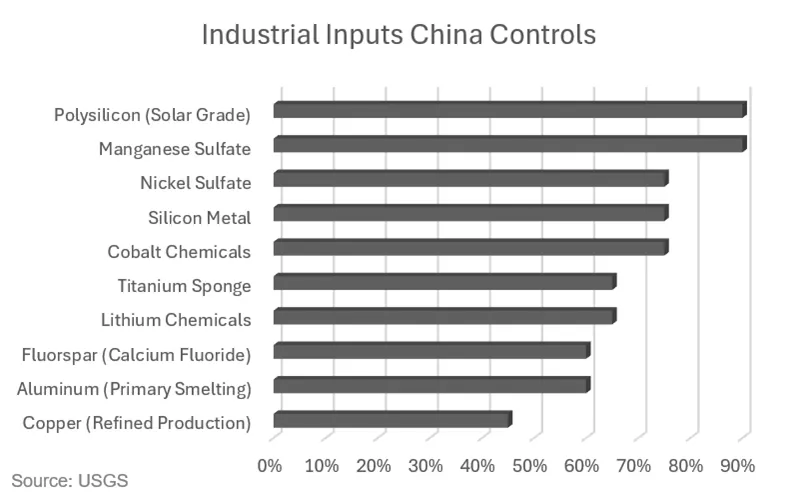
Strategic Importance
Copper (Refining)
Copper is often referred to as the “metal of electrification.” While copper ore is mined globally, China dominates the refining stage, converting concentrates into the high-purity metal required by industry. Any disruption would ripple through energy infrastructure, manufacturing, and global electrification efforts.
Primary Uses
- Electrical wiring
- Power grids
- Renewable energy
- Electric vehicles
- Construction
- Telecommunications
Aluminum
Aluminum is the world’s second most widely used metal after steel and forms the backbone of modern manufacturing. China’s dominance in primary smelting gives it enormous influence over industries ranging from commercial aviation and automobiles to electrical infrastructure and military equipment.
Primary Uses
- Transportation
- Aerospace
- Electrical transmission
- Packaging
- Construction
- Defense manufacturing
Titanium Sponge
Titanium sponge is the intermediate product required to manufacture titanium metal. It underpins aerospace and defense manufacturing, where titanium’s high strength-to-weight ratio and corrosion resistance are indispensable.
Primary Uses
- Aerospace
- Defense
- Medical implants
- Chemical processing
- Naval applications
Lithium Chemicals
Mining lithium is only the first step. Battery manufacturers require refined lithium chemicals such as lithium hydroxide and lithium carbonate. China controls much of this processing capacity, creating one of the largest bottlenecks in the global battery supply chain.
Primary Uses
- Lithium-ion batteries
- Grid-scale storage
- Consumer electronics
- Electric vehicles
Cobalt Chemicals
Although most cobalt is mined in the Democratic Republic of Congo, the majority is refined in China. This gives China considerable leverage over battery manufacturing and advanced industrial applications despite limited domestic mine production.
Primary Uses
- Battery cathodes
- Aerospace superalloys
- Defense applications
- Industrial catalysts
Nickel Sulfate
Nickel sulfate is the preferred feedstock for high-energy-density battery cathodes. China’s investment throughout Indonesia’s nickel industry has allowed it to dominate processing, positioning it at the center of the electric vehicle supply chain.
Primary Uses
- High-nickel EV batteries
- Energy storage
- Advanced battery chemistries
Manganese Sulfate
While manganese itself is abundant, battery-grade manganese sulfate is highly concentrated in China. It is a critical component of many modern battery chemistries and represents another often-overlooked processing dependency.
Primary Uses
- Lithium-ion battery cathodes
- Electric vehicles
- Grid-scale storage
Silicon Metal
Silicon metal is a foundational industrial material with applications spanning semiconductors, renewable energy, and advanced manufacturing. China’s dominance extends well beyond electronics into virtually every segment of modern industry.
Primary Uses
- Semiconductors
- Aluminum alloys
- Solar panels
- Electronics
- Silicones
Fluorspar
Fluorspar is one of the least appreciated strategic minerals. It serves as the starting material for hydrofluoric acid, an essential chemical used in semiconductor fabrication, uranium enrichment, aluminum production, and numerous industrial processes.
Primary Uses
- Hydrofluoric acid
- Aluminum production
- Steelmaking
- Semiconductor manufacturing
- Refrigerants
Polysilicon
China dominates the production of solar-grade polysilicon, making it the cornerstone of global solar manufacturing. As countries accelerate renewable energy deployment, this concentration has become an increasingly significant geopolitical vulnerability.
Primary Uses
- Solar photovoltaic cells
- Semiconductor industry
The Bottom Line
These are not niche materials, they are the critical materials, minerals, and metals that underpin the global industrial economy. Together they form the backbone of electrification, aerospace, construction, transportation, and advanced manufacturing. China’s dominance extends beyond isolated commodities; it encompasses the full spectrum of fundamental materials required to build and maintain modern civilization.
Strategic Chokepoints
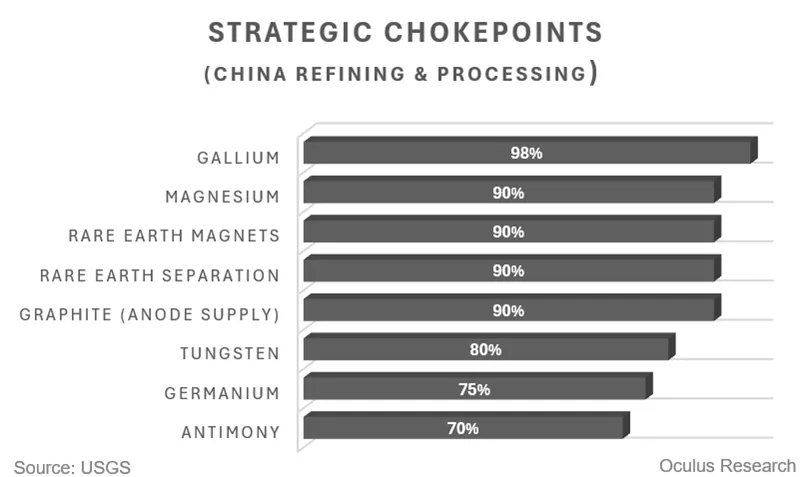
Strategic Importance
Gallium (Ga)
Gallium is indispensable for high-frequency, high-power semiconductors that conventional silicon cannot replace in many defense and communications applications. It is a foundational material for modern radar, satellite communications, advanced weapon systems, and next-generation AI infrastructure.
Primary Uses
- Compound semiconductors (GaN, GaAs) for advanced electronics
- AI data centers and high-performance computing
- 5G telecommunications infrastructure
- Radar systems and military electronics
- Power electronics for EVs and renewable energy
Germanium (Ge)
Germanium enables secure communications through fiber optics while serving as a critical component in infrared imaging and military surveillance technologies. A prolonged supply disruption would affect both civilian telecommunications infrastructure and advanced defense systems.
Primary Uses
- Fiber optic cables
- Infrared optics and thermal imaging
- Military night vision systems
- Space-based solar cells
- Semiconductor applications
Graphite (Natural & Synthetic)
Nearly every lithium-ion battery requires graphite, with anodes containing significantly more graphite by weight than lithium itself. While lithium often receives the attention, graphite represents one of the largest and least diversified bottlenecks in battery supply chains.
Primary Uses
- Lithium-ion battery anodes
- Electric vehicles
- Grid-scale energy storage
- Steelmaking refractories
- Industrial lubricants
Rare Earth Separation
Mining rare earths is only the beginning. Without separation facilities, mined concentrates cannot be converted into usable industrial materials. China dominates this stage of the value chain, making Western mining projects heavily dependent on Chinese processing capacity.
Primary Uses
- Separation of rare earth concentrates into individual oxides
- Essential intermediate step before manufacturing magnets and specialty materials
Rare Earth Permanent Magnets
Permanent magnets are among the most strategically important manufactured products in the world. They enable compact, high-efficiency electric motors used across both the energy transition and modern defense systems. Their importance extends far beyond electric vehicles.
Primary Uses
- Electric vehicle motors
- Wind turbines
- Industrial robotics
- Missiles and precision-guided munitions
- Aircraft and naval propulsion systems
- Consumer electronics
Antimony
Antimony has become increasingly important due to its defense applications. It strengthens ammunition, armor-piercing projectiles, and specialized military alloys while remaining difficult to substitute in many applications.
Primary Uses
- Ammunition and military alloys
- Flame retardants
- Lead-acid batteries
- Semiconductor applications
- Infrared sensors
Magnesium
Magnesium is essential for producing lightweight structural alloys used in aircraft, vehicles, and defense equipment. It is also a key input in titanium production, making it an upstream dependency across multiple strategic industries.
Primary Uses
- Aluminum alloy production
- Aerospace components
- Automotive lightweighting
- Defense manufacturing
- Titanium production (Kroll process)
Tungsten
Tungsten possesses the highest melting point of any metal and exceptional hardness, making it indispensable for defense, heavy industry, aerospace, and advanced manufacturing. There are few practical substitutes for many of its applications.
Primary Uses
- Armor-piercing ammunition
- Cutting tools
- Aerospace components
- Mining equipment
- High-temperature industrial applications
The Common Thread
These materials share three key characteristics. They are produced in relatively small volumes but are indispensable to high-value industries. In many applications, there are few commercially viable substitutes. China’s dominance is concentrated not only in mining, but in the refining, separation, and manufacturing stages that transform raw materials into usable industrial products. It is worth reiterating, strategic vulnerability is not simply access to resources, it is access to processing capacity.
IF CHINA STOPS EXPORTING TOMORROW
The problem is not access to raw metals or minerals. It is in replacing an ecosystem China has spent 30 years building. In that time, they developed technologies and know-how that the West does not possess. State-backed, government subsidized enterprises continue to accelerate China’s dominance while simultaneously creating concrete economic barriers for Western projects. In most cases, the resulting suppressed price levels of individual critical metals and materials make prospective Western refining and processing projects uneconomical without government support.
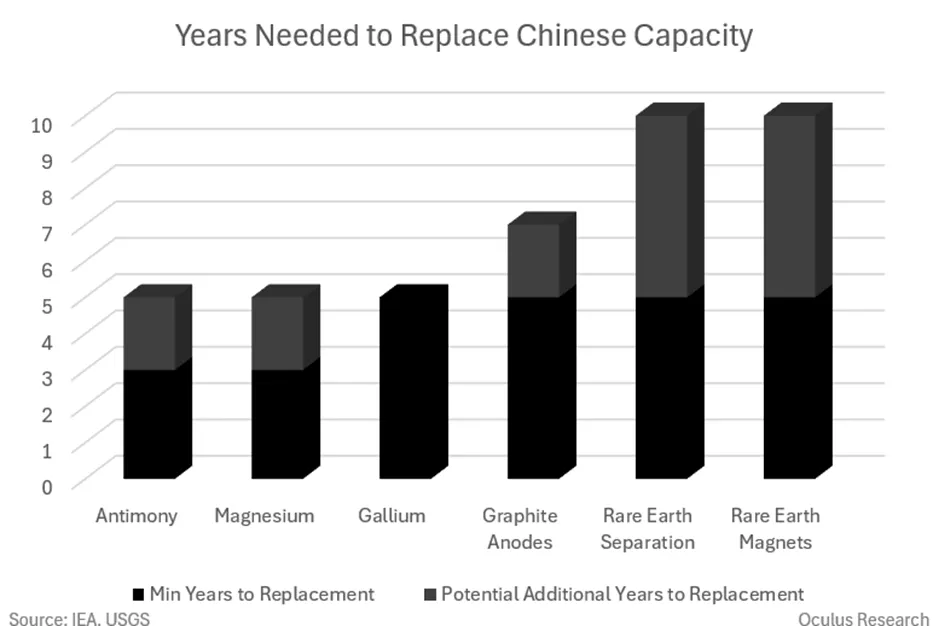
The Multi-Decade “Knowledge and Skills Gap”
Over the last 40 years, Western nations largely outsourced refining to China to minimize domestic pollution and cut costs. The result is a severe deficit in Western practical metallurgical and chemical engineering expertise. Designing, piloting, and troubleshooting custom chemical separation lines from scratch requires extensive trial-and-error, drastically lengthening the engineering phase.
Why Capital is Not Solving the Problem
China and the West are financing fundamentally different objectives. While China finances strategic capacity, the West is limited by financing expected returns. That difference is why China was willing to build excess refining capacity that private Western capital never would have funded.
Private markets in the West are largely incapable of solving this problem today. Resource investing carries a very different risk reward profile than preeminent investment themes (technology) today. Resource projects require billions of dollars up front and decade long development timelines. Investors are highly reluctant to fund 10-year projects due to extreme price volatility in underlying commodities. While the risks are numerous, the outcomes, discounted at current commodity prices, are relatively capped. Even successful projects rarely generate valuation multiples available in technology or software business. As a result, capital naturally flows elsewhere.
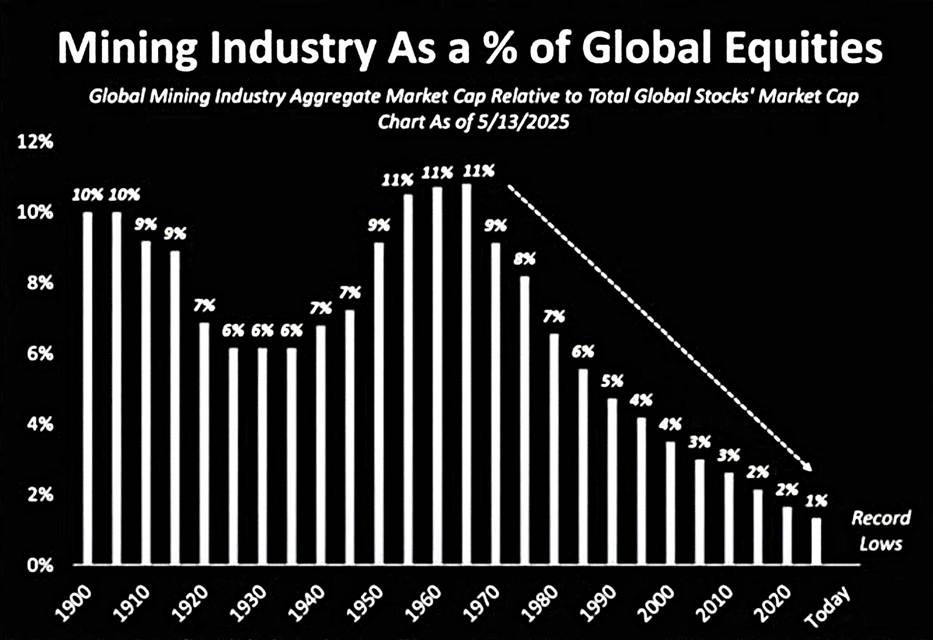
While state-backed Chinese producers benefit from patient, state-subsidized capital, Western projects rely on fragmented private markets, public equity markets and commercial banks to finance the development of their projects. State-backed Chinese producers weaken the feasibility of Western producers by artificially depressing prices; rending western most projects uneconomical.
Permitting and Environmental Review
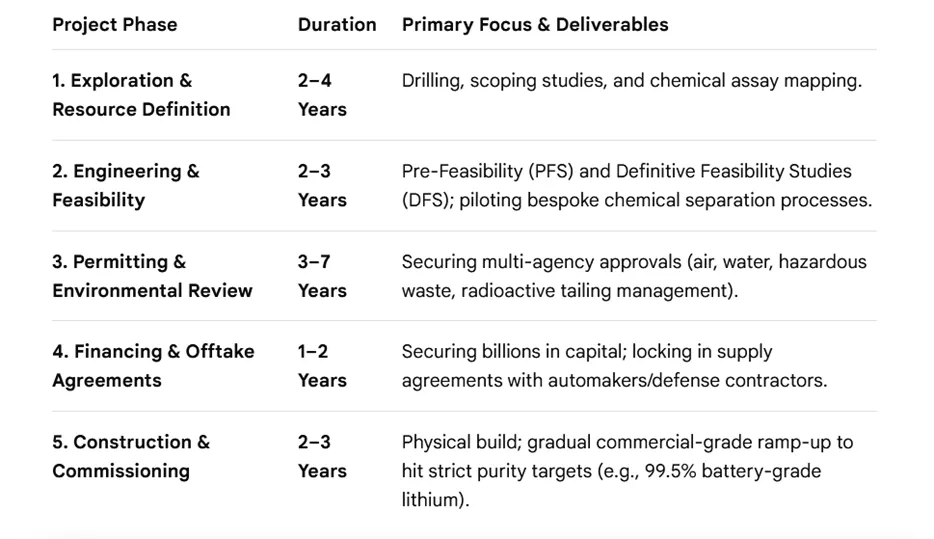
Each phase in the development of new refining and processing takes years. Western projects face significant delays and legal vulnerabilities, primarily driven by overlapping federal jurisdictions, resource-intensive regulatory compliance, and frequent litigation. In U.S. NEPA (National Environmental Policy Act) requires federal agencies to assess the environmental impacts of proposed projects. Environmental Impact Statements (EIS) can take 4.5 to 7 years to complete, introducing significant project delays and costs. By the time Western projects reach commercial production, geopolitical conditions may have changed entirely.
The Average Timeline for Western Development is 5-10
Case Studies
U.S.
Resolution Copper is a massive copper project in Arizona. The project, a joint venture by Rio Tinto and BHP, was officially started in 2004, over two decades ago. The project has spent 13 years in the federal environmental and permitting review process. Once permitting is finalized, construction is expected to take 10 years to complete.
EU
Talga Group (Major EU Graphite project). It has been in the early stages of permitting and development for over a decade. When the project completes subsequent development milestones, and the mine is operational, it will only be allowed to operate 6 months out of the year to preserve the local rein deer population.
These projects are not exceptions; they are representative of the structural hurdles facing Western industrial development. These barriers and limitations faced by Western producers are in stark contrast to landscape Chinese enterprises operate in in China
The Transition
Western countries have only begun to address this credible threat to their economies, technological innovations, and national defense security. Government policy is beginning to address the economic leverage China holds and take actionable steps to correct course.
U.S.
The U.S. has taken steps in the right direction with the announcement of Project Vault establishing a U.S. Strategic Critical Minerals Reserve. The measure acts massive financial and physical backstop to protect Western industries from Chinese export restrictions and price manipulation. Additionally, the IRA (Inflation Reduction Act) introduced a 10% tax credit (equal to 10% of production costs) for domestically processed critical minerals.
The U.S. has begun to pour billions into direct infrastructure spending. This includes $5 billion via the Industrial Base Fund for midstream processing, $2 billion for the National Defense Stockpile Transaction Fund to build sovereign mineral reserves, and $7.5 billion allocated directly to the Department of Defense for targeted critical minerals projects. Additionally, U.S DOE (Department of Energy) has begun to prioritize domestic refining and processing projects by leveraging large-scale federal funding, the Defense Production Act (DPA), and dedicated loan programs to establish a resilient, secure, and self-sufficient critical minerals and materials supply chain.
EU
Arguably, the EU has taken greater and more structurally effective measures to reshore supply chains. The EU approach emphasizes legally binding self-sufficiency targets. The recent implementation of The Critical Raw Materials Act (CRMA) acting to secure 34 essential elements. The Act mandates strict 2030 Domestic Consumption Benchmarks: Extraction: At least 10% must be mined within the EU. Processing: At least 40% must be refined/processed within the EU. Recycling: At least 25% must come from domestic secondary recycling. Anti-Monopoly Cap: No more than 65% of any single strategic material can come from a single foreign nation (targeting China)
The EU’s primary policy failure has been its inability to match U.S. federal capital injections. While the EU’s Critical Raw Materials Act (CRMA) fast-tracks permits for “Strategic Projects”, it provided €0 in new, centralized EU funding. Instead, the EU has instructed members to fund projects locally; leading to a highly fractured funding map with countries like France (EU’s second largest economy) launching a paltry €500 million fund while countries like Italy launched a €1 Billion fund.
Is it Enough… No
Current policies represent an important shift in direction, but not yet a solution. Thirty years of industrial concentration cannot be reversed in five. To fully correct course, these actions must serve as the first steps, the beginning of an ongoing trend. To be effective, they must be followed by subsequent actions of greater magnitude. This is only the beginning.
The Investment Implication
Markets continue to price critical minerals and materials through today’s commodity fundamentals. A fundamental framework that has increasingly become outdated. Commodities that were once discretionary have become necessity.
Governments are increasingly valuing critical materials not through today’s commodity prices, but through tomorrow’s national security requirements. The market remains focused on near-term earnings, as Governments begin to place increasing value on strategic resilience. The shift has only just begun.
A New Era in Critical Resource Supply Chains
The West can no longer comfortably rely on third parties to outsource their economy’s critical inputs. Globalization has enabled economic prosperity, but it will not secure it. The increasing importance of and dependence on critical minerals, materials, and metals (copper, lithium, graphite, titanium, etc.) has created an obligation for Western nations to reshore their supply chains.
Investing For a Different Timeline
The reshoring of Western supply chains will not unfold over quarters, it will unfold over the coming decades. Entire refining and processing industries must be built from the ground up.
· New mines must be financed
· Processing capacity must be constructed.
· Engineering expertise must be redeveloped.
While the market continues to focus on the next earnings season, Governments are beginning to plan for the next generation. That disconnect may become one of the defining investment themes of the coming decade.
OCULUS RESEARCH
Future reports will examine the individual supply chains, projects, and companies positioned to benefit from this transition. The objective is not simply to identify critical materials. It is to identify the entities rebuilding the industrial foundations that those materials require.
.