.
What People Expect:
When geopolitical tensions escalate, most market participants expect immediate, pronounced moves in assets correlated to that macro backdrop.
Risk off.
Capital rotates.
Gold rises. Silver follows. Defense stocks bid.
The event becomes the starting line.
What Actually Happens:
Markets move on anticipation, not confirmation.
They price future expectations well before events become visible. Prices reflect not only what is known, but what is increasingly being positioned for.
By the time the news is public, the positioning is already crowded.
This is where many participants misinterpret price action. They attribute early moves to prevailing narratives, only to see those views invalidated once the event unfolds.
Current Example:
Weeks, months before the Iran conflict escalated, Gold, Silver, and Oil were already moving higher.
The narratives:
Gold: unsustainable global debt, debasement, inflation
Silver: solar demand, persistent deficits
Oil: chronic underinvestment meeting steady demand
The Reality:
While these narratives hold merit, price action suggests that geopolitical risk, in this example – potential escalation in Iran, was a key driver of the move.
It’s uncomfortable reality to accept: The market knew before you did.
Gold: the long-term thesis remains intact, but its drivers are structural, not short-term catalysts that justify sharp, rapid spikes.
Silver: deficits peaked in 2024 and have begun to normalize.
Oil: the bullish thesis is real, but it unfolds over years, not in sudden 50–100% moves driven by a single catalyst.
The Event:
When the event itself materializes, the news is public.
Positioning peaks. Expectations are fully expressed.
The market, always forward-looking, begins to reprice not the event…
but what comes next:
resolution, stabilization, de-escalation.
The Proof:
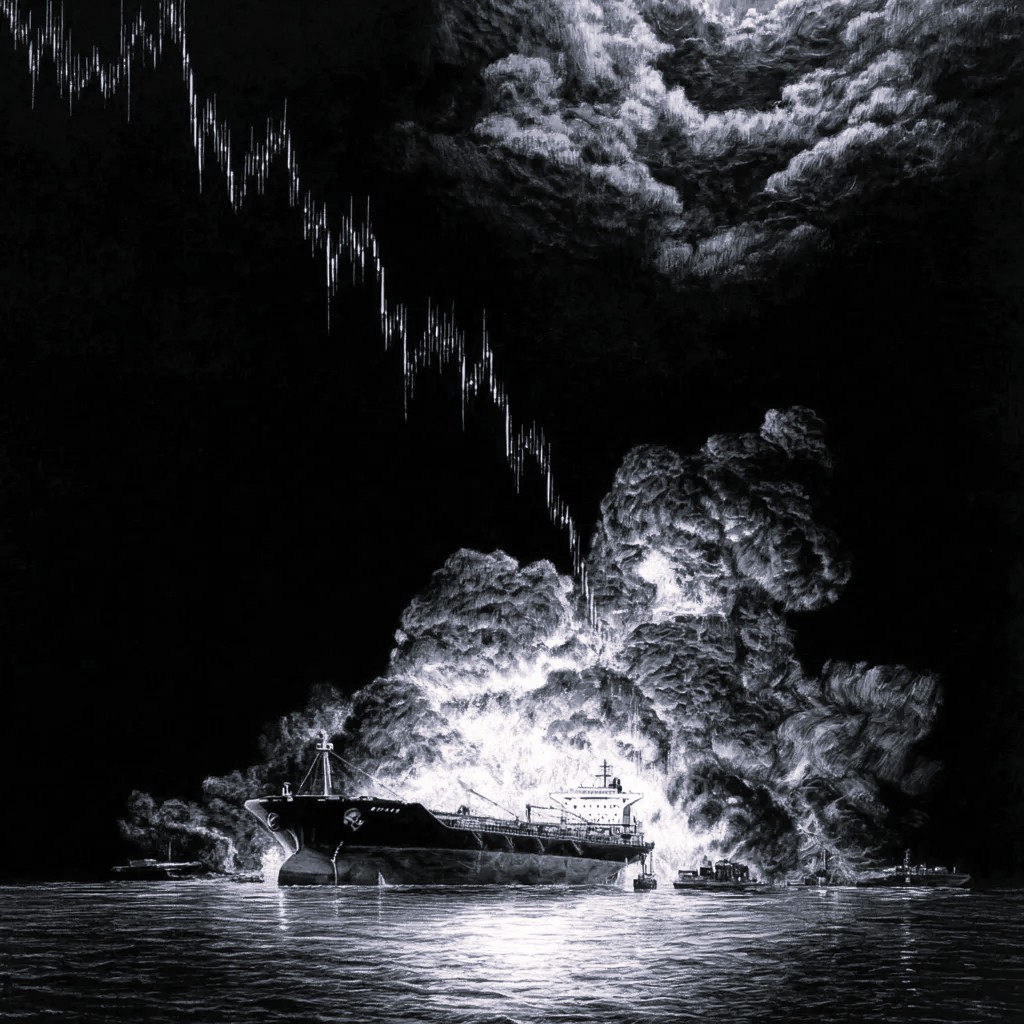
When the conflict with Iran escalated, Gold and Silver peaked and subsequently broke down.
This reaction suggests that the dominant narratives used to justify the prior rally were incomplete.
The metals were not reacting to the event, they were pricing it in ahead of time.
The Aftermath:
As event-driven distortions unwind, prices begin to realign with underlying fundamentals.
• Technical levels regain importance
• Positioning normalizes
• Structural drivers reassert themselves
Over the long term:
Gold will continue to reflect monetary conditions
Silver demand will likely grow
Oil will reprice toward its structural supply-demand balance
But those are slow-moving forces, not event-driven spikes.
Why This Matters:
What we are seeing in Gold, Silver, and Oil isn’t an anomaly.
It’s the mechanism.
Markets don’t react to events, they anticipate them.
The narrative is clearest right when the opportunity disappears.
This is why so many high-conviction trades fail:
• Buying strength that immediately fades
• Chasing confirmation that marks the top
• Feeling “right” on the story, but wrong on timing
The market doesn’t validate the narrative.
It moves ahead of it.
What feels like a disconnect from reality is in fact a reflection of a reality that hasn’t fully unfolded yet.
The Edge:
The edge isn’t in knowing what’s happening.
It’s in recognizing
What’s already been priced in and what hasn’t.
Macro Implications of the Phenomenon:
This dynamic is not isolated to geopolitics or precious metals.
It is the same mechanism that creates some of the most compelling opportunities across commodity markets.
The same forward-looking behavior that led Gold to rally before the conflict and stall once it arrived is the same force driving dislocations in markets like copper, graphite, and nickel.
In these markets, the issue is not misreading headlines.
It is mispricing structure.
Complex, multi-stage supply chains are compressed into simplified narratives obscuring where real constraints exist.
That’s where dislocations form.
Where the most asymmetric opportunities emerge.
Earlier this year, we wrote: “Gold is Not Rallying, it’s Warning.”
Not of what was happening, but of what was coming. Markets don’t explain themselves in real time.
They position first, and wait for the narrative to catch up.
Closing
If you’re trading the news, you’re trading someone else’s exit.
Markets don’t reward confirmation.
They reward anticipation.
By the time it feels obvious,
the opportunity is usually gone.