
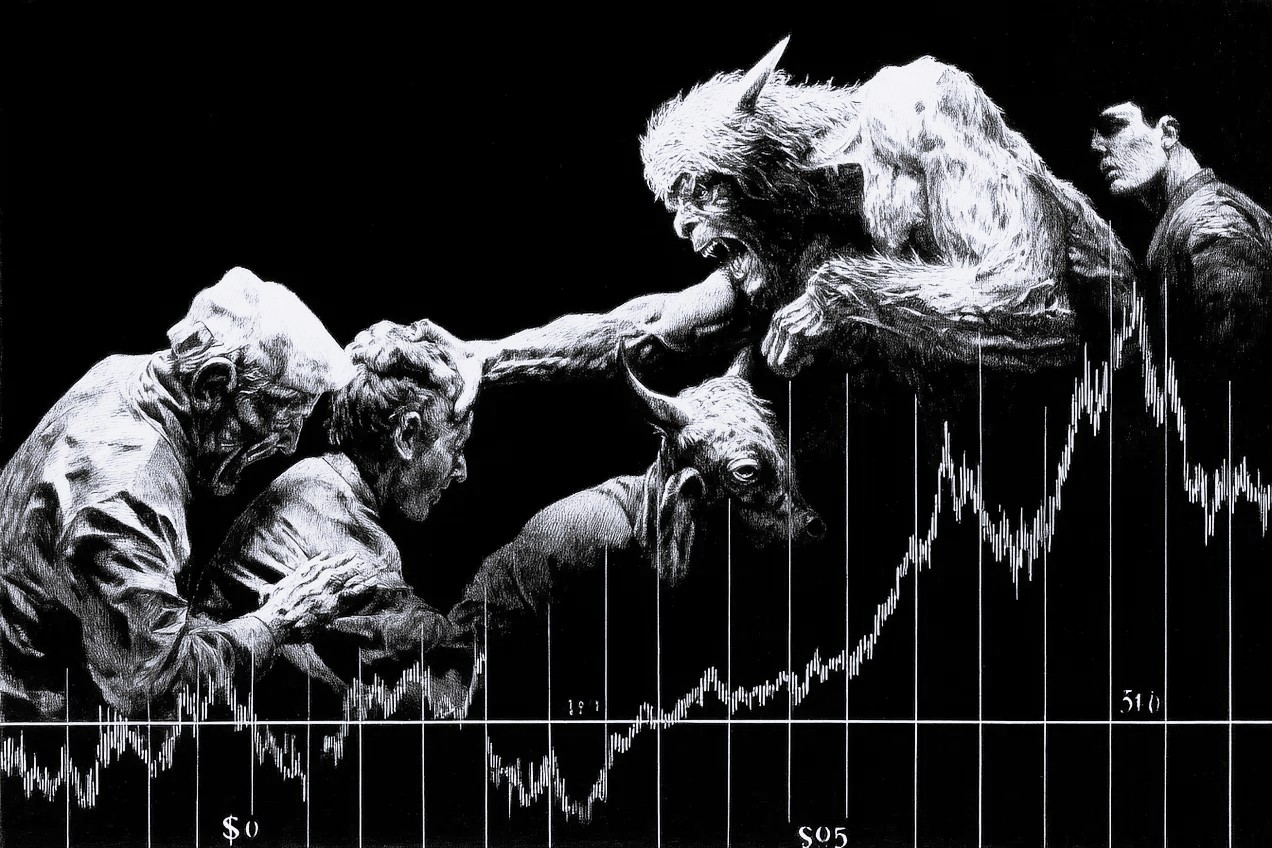
Financial markets are driven by intangibles: ideas, narratives, and promises. Reality, however, runs on atoms, energy, and critical materials. These are the enabling inputs beneath every technological ambition. There will be no shortage of technological advances capable of transforming the world we live in. Transitions rarely fail due to insufficient demand or a lack of technological ingenuity; they fail when confronted by physical constraints.
A current example illustrates the inescapable nature of these constraints.
In the United States, billions of dollars are being allocated toward the construction of large-scale data center infrastructure to support artificial intelligence and cloud computing. In many regions, however, the electrical grid lacks the capacity required to bring these facilities online. Capital and narrative have moved faster than physical reality. The constraint is not funding, demand, or technology, it is energy: a tangible, physical limitation. This is not an isolated case; it is an increasingly common pattern.
These constraints are not unknown. They are simply ignored or dismissed by financial markets. They do not feed the animal spirits: they are incapable of moving quarterly earnings or supporting narratives of infinite valuation expansion. Addressing them requires investment in energy infrastructure, mining, and refining capacity — sectors burdened by inconvenient realities, including geopolitics, geological constraints, and extended permitting timelines. These industries tend to operate with well-defined multiples and largely predictable outputs.
The market’s prevailing models for these sectors may appear adequate today. What those models fail to incorporate is the inevitable recognition of the central role these inputs play in enabling technological transformation. That recognition, when it arrives, will not be linear. It will manifest through acute supply–demand imbalances and abrupt revaluations.
Markets price narratives of possibility while systematically discounting the constraints of reality. Technology theses are built around promise. Materials impose mandates to fulfill those promises. Technology is inherently fluid: software scales in months, code can be rewritten, and architectures iterated. Materials do not share this flexibility. They require decades to scale. A mispriced or miscalculated supply–demand balance cannot be corrected on demand.
Critical materials are not in demand because they are optimal choices; in many cases, they are the only viable choices. Their relevance is dictated by unique atomic or molecular properties. In critical systems, substitution is often theoretical rather than practical, particularly at scale. Where substitution is technically possible, demand is frequently transferred rather than eliminated; shifting pressure from one material system to another.
The market’s focus remains centered on technological innovation, with an emphasis on speed, iteration, and disruption. Its blind spot lies beneath that focus. Every technology rests upon a material stack; one that does not iterate at the pace of capital allocation or ambition. These physical stacks are governed by physics, geology, industrial capacity, and regulation.
As technological adoption accelerates, these constraints will become increasingly visible until they are impossible to ignore. Early fractures are already forming. They have begun to surface in public discourse, though they remain largely unpriced by markets.
Recognition of material constraints alone does not produce investable insight. The challenge is not identifying their existence, but determining where they are misunderstood, mispriced, or entirely overlooked. Markets routinely misjudge execution risk, timelines, and the nonlinear nature of emerging supply–demand imbalances; particularly when those imbalances originate beneath widely celebrated technological breakthroughs.
Oculus’ methodology is designed to identify where these dislocations are most likely to emerge by moving systematically from macroeconomic forces to material realities, and finally to company-level analysis to assess who is positioned to benefit.
Oculus will publish selectively, prioritizing depth over frequency. The objective is long-term relevance rather than immediacy. This research is intended for readers who view markets as evolving pricing mechanisms rather than collections of isolated trades.
In a world increasingly focused on narratives of aspiration, Oculus asks a quieter question:
What must be available for what the market has already priced in to come to fruition?