
Titanium is not a cyclical materials story. It is a systems bottleneck embedded in Artificial Intelligence Stack.
The market continues to price legacy demand - aerospace, defense, and biomedical applications.
It is underpricing robotics convexity
Titanium is not a cyclical materials story. It is a systems bottleneck embedded in Artificial Intelligence Stack.
The market continues to price legacy demand - aerospace, defense, and biomedical applications.
It is underpricing robotics convexity
.
.
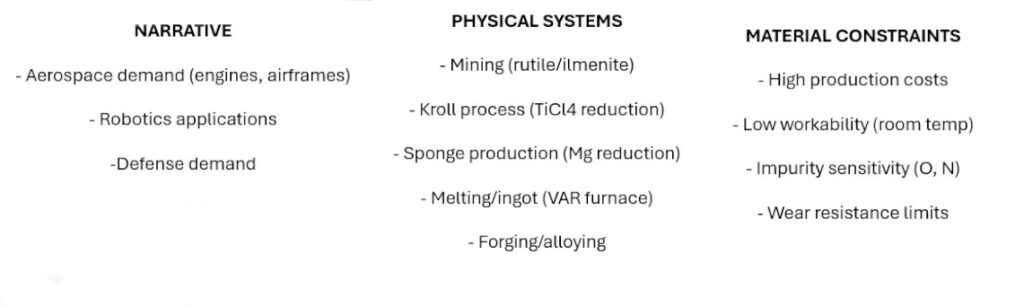
The market continues to value titanium through a legacy aerospace lens. That framing misses the emerging demand impulse from robotics, electrification infrastructure, and high-stress industrial automation.
While broad commodity markets remain cyclically sensitive, titanium’s forward supply elasticity is structurally constrained:
Our modeling suggests:
The inflection is not immediate but when supply elasticity collapses, pricing regimes re-rate abruptly.
This memo focuses on that transition.
.
.

.
Markets are currently pricing:
What is underpriced is the physical substrate required to implement those systems.
Advanced robotics platforms require:
Titanium occupies the intersection of these constraints.
Unlike software scaling curves, materials adoption is gated by physical throughput. When automation scales beyond pilot stage into industrial deployment, intensity per unit rises materially.
The demand growth of Titanium is not speculative. It is physics driven.
.
.

.
.
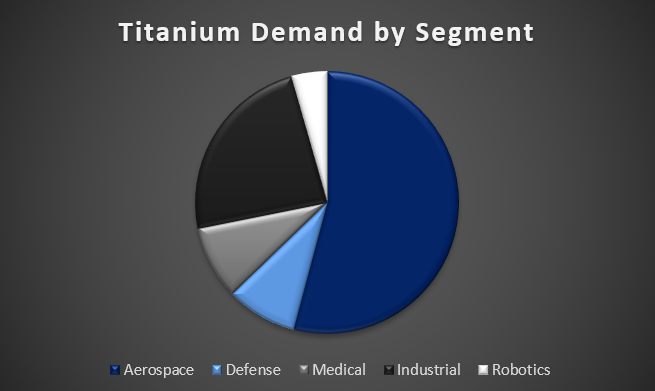
Titanium demand today is concentrated in:
.
.
.

.
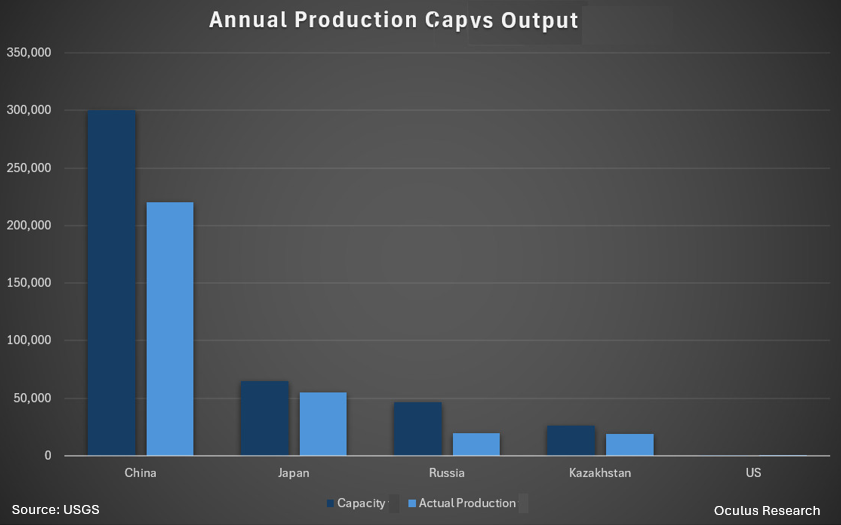
Supply structure:
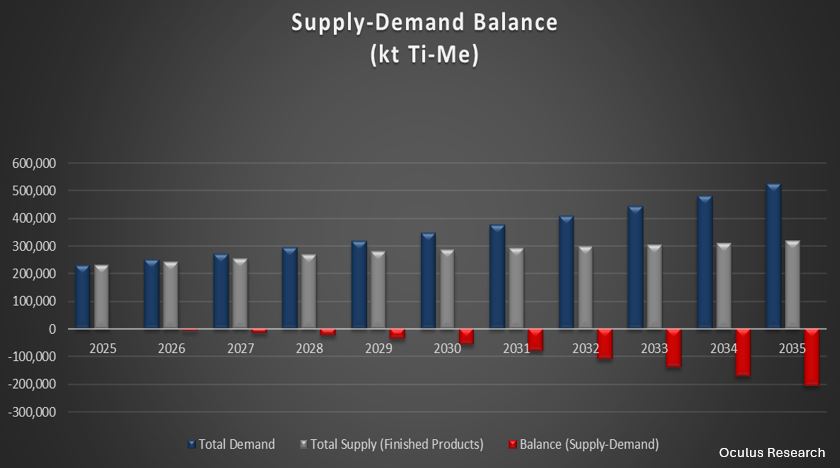
Capacity utilization is currently below structural constraint levels, which masks the medium-term inflection.
This creates a false sense of elasticity.
The Titanium Market behaves in two regimes:
Regime 1: Underutilized Capacity (2025–2030)
Producers increase output through:
(Elasticity appears healthy)
Regime 2: Capacity Binding (Post-2030)
Once sponge capacity approaches structural limits:
At this stage, small demand surprises create disproportionate price response.
The market currently prices Regime 1 indefinitely.
.
.
.

.
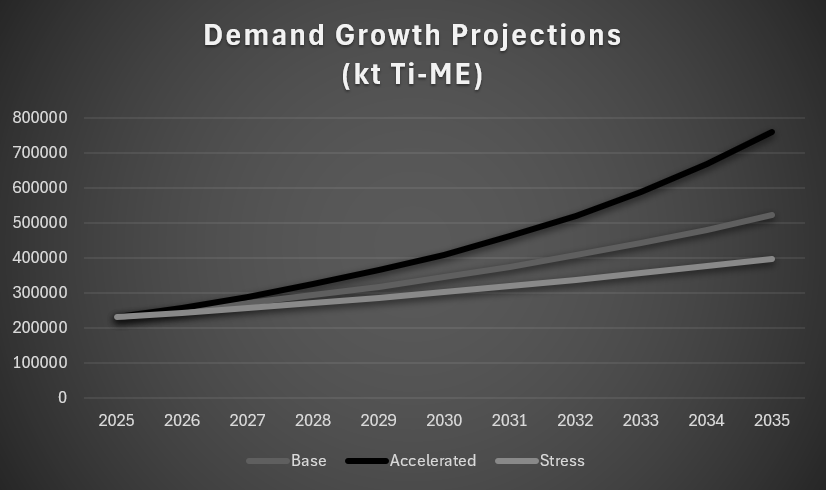
We model three demand cases (kt Ti-ME):
Base Case
Accelerated Case
Stress Case
The difference between Base and Accelerated cases becomes material only after 2029 — when capacity elasticity declines.
.
.
.

.
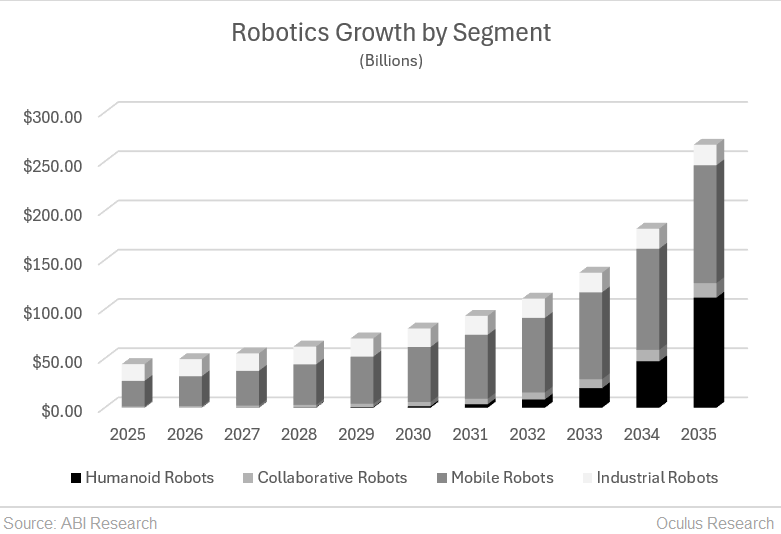
Current robotics titanium intensity is low relative to forward design requirements.
As automation scales:
Titanium use per unit rises as deployment complexity increases.
This creates:
A non-linear demand response to robotics penetration.
Even modest increases in industrial automation intensity and humanoid growth can shift titanium balance materially once sponge utilization exceeds 85–90%.
This is the embedded optionality in the system.
.
.
.

.
Our projections suggest:
This aligns with:
Markets price narratives early, but price regimes shift only when balance sheets tighten physically.
The inflection window is 4–6 years out.
Positioning requires patience.
.
.
.
.
Key Risks:
Counterpoint:
Even in stress scenarios, long lead times cap supply response.
Downside is cyclical. Upside is structural.
.
.
.
.
.
Titanium is not scarce today.
It becomes scarce when capacity utilization binds.
Markets are currently anchored to:
They are not pricing:
This is not a 2026 trade.
It is a 2029–2032 structural repricing thesis.
Capital allocation requires patience, but the embedded asymmetry increases materially as we approach capacity inflection.
Investment Implications:
.
Detailed allocation strategies are provided separately in the Oculus Exposure Report.
This memo focuses on structural system analysis and balance dynamics.
.
.
.